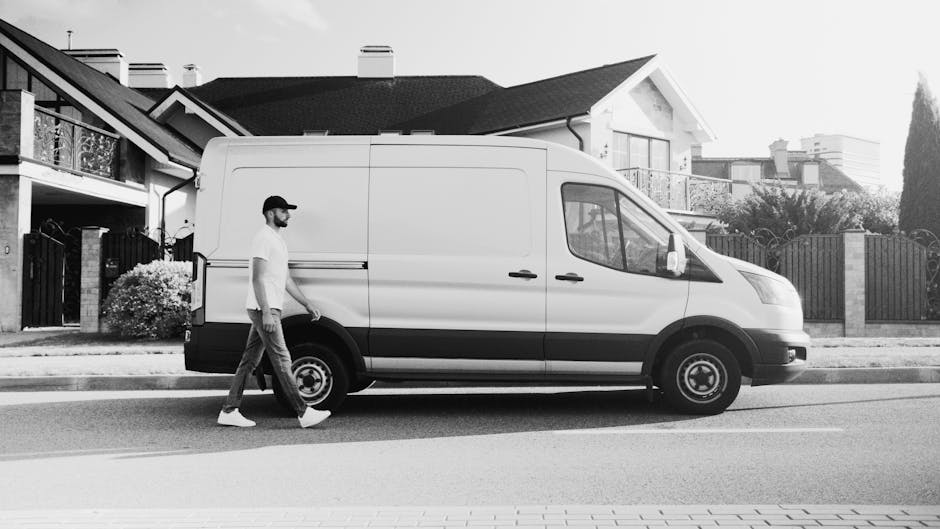
Compare man-and-van vs full-service removals in BR5
If you are planning a move in BR5, you have probably reached the classic crossroads: do you book a man-and-van service or go for full-service removals? It sounds simple on the surface, but the choice changes almost everything - cost, effort, timing, packing stress, and how much heavy lifting ends up on your shoulders. In a busy area like BR5, where driveways can be tight and moving day can feel a bit like a choreography you did not rehearse, getting this right matters.
This guide breaks down Compare man-and-van vs full-service removals in BR5 in plain English. You will see what each option really includes, who it suits, where the hidden snags are, and how to decide without overpaying or underbooking. And yes, there is a fair bit of nuance here - because "cheapest" is not always cheapest once you factor in time, risk, and your own sanity.
Contents
- Why Compare man-and-van vs full-service removals in BR5 Matters
- How Compare man-and-van vs full-service removals in BR5 Works
- Key Benefits and Practical Advantages
- Who This Is For and When It Makes Sense
- Step-by-Step Guidance
- Expert Tips for Better Results
- Common Mistakes to Avoid
- Tools, Resources and Recommendations
- Law, Compliance, Standards, or Best Practice
- Options, Methods, or Comparison Table
- Case Study or Real-World Example
- Practical Checklist
- Conclusion
- Frequently Asked Questions
Why Compare man-and-van vs full-service removals in BR5 Matters
Choosing between these two services is not just about price. It affects the whole move - how many trips you need, whether furniture is dismantled, who packs the boxes, how long you are without your belongings, and whether you are left staring at a bed frame at 9pm thinking, "well, this was optimistic."
In BR5, practical considerations can matter more than people expect. Some homes have awkward access, shared parking, or narrow streets where a larger vehicle is less convenient. A smaller van can be easier to position, but if you have a full house move, multiple floors, fragile items, or a deadline to clear the property, full-service removals may save time and stress.
It also matters because the wrong choice can create knock-on costs. A low-cost man-and-van booking might look attractive, but if you still need packing help, carrying help, dismantling help, and maybe a second trip, the total can creep up. On the other hand, full-service removals can feel like overkill for a studio flat with just a few bulky items. So the real question is not "which is better?" It is "which is better for your move in BR5?"
For readers comparing broader moving options, it can help to look at the service range behind the job title. A reputable removal services page often gives you a clearer picture of what is included than a simple headline price ever will.
How Compare man-and-van vs full-service removals in BR5 Works
At the simplest level, a man-and-van booking provides transport and loading help, while full-service removals include a more complete moving package. But those words can hide a lot of variation, so it is worth unpacking them properly.
Man-and-van in practice
A man-and-van service usually means one driver and one vehicle, sometimes with extra help depending on the booking. It is commonly used for smaller house moves, single items, furniture collection, student moves, and quick local jobs. The main idea is flexibility. You can load just what you need, often at short notice, and keep costs relatively contained.
That said, "man-and-van" does not automatically mean the team will pack your kitchen, wrap your mirrors, or dismantle your wardrobe. Sometimes they will help with loading and unloading only. Sometimes they will do a little more. The details matter a lot. If you want a more tailored setup, a page like man and van is usually the right starting point for understanding the scope.
Full-service removals in practice
Full-service removals are more hands-off for you. They often include packing materials, packing assistance, careful handling of breakables, furniture dismantling and reassembly, loading, transport, unloading, and sometimes unpacking too. If you are moving a full household, or just do not want the move to take over your week, this is the more complete option.
It is the kind of service where the movers arrive with a plan. Boxes are labelled, furniture is protected, and the day tends to move in a more orderly way. Not magical, but orderly. You are still involved, of course, yet the heavy stuff is managed by people who do this every day.
What changes between the two
The biggest differences are usually:
- Time commitment - man-and-van often takes more of your personal time and effort.
- Support level - full-service removals cover more tasks beyond transport.
- Vehicle size - vans can be smaller and nimble; full-service moves may use larger vehicles or more than one.
- Risk of stress - the more you do yourself, the more you need to stay organised.
- Cost structure - man-and-van can look cheaper upfront, while full-service removals may offer better value for larger or more complex moves.
If you are comparing vehicle types too, it may help to read about a moving van or broader removals support so you can see how the transport piece fits into the overall job.
Key Benefits and Practical Advantages
Both options have a place. The trick is matching the service to the move, not the other way around.
Why a man-and-van can be a smart choice
- Good for smaller loads - one-bedroom flats, partial moves, a few large items, or furniture pick-up jobs.
- Flexible and nimble - easier to book for quick moves or awkward access.
- Often more affordable upfront - especially when you only need transport and lifting help.
- Less overcommitment - you are not paying for services you do not need.
For a lot of people, this is the sweet spot. A couple moving from a compact flat, or someone shifting furniture into storage, may find a man-and-van service feels refreshingly straightforward.
Why full-service removals can be the better value
- Less physical effort for you - important if you are short on time, energy, or extra hands.
- Better for fragile, bulky, or high-value items - because packing and handling are more controlled.
- More efficient for bigger moves - one well-managed move can be better than two or three smaller, stressful ones.
- Helpful for complex logistics - stairs, long carry distances, multiple rooms, or strict moving windows.
Truth be told, full-service removals often look more expensive only until you add up your own time, packing materials, and the inevitable last-minute panic buys from the nearest shop. Then the maths starts to shift a bit.
Local BR5 advantages to think about
BR5 moves can involve residential roads, mixed property types, and routes where timing matters. A more complete removals team can reduce the need for repeated trips and minimise the awkward "where do we park this van for an hour?" problem. But if access is simple and you only have a few items, a smaller setup may be far more practical.
Who This Is For and When It Makes Sense
The right choice depends on the size of your move, your budget, and how much you want to do yourself. Here is the blunt version.
Man-and-van suits you if:
- You are moving a small flat, room, or limited number of items.
- You can pack most things yourself.
- You need a local move with simple logistics.
- You are comfortable doing some lifting and coordination.
- You want an efficient, budget-conscious option.
Full-service removals suits you if:
- You are moving a full house or a larger family home.
- You have heavy, awkward, or delicate furniture.
- You need packing and unpacking support.
- You are under time pressure.
- You want the least disruptive moving day possible.
There is also a middle ground. Some customers do not need a fully packed service, but they do want help with the big items. That is where a more flexible moving team or a service like movers can make the decision less binary.
And if your move involves more than a home address - say a small business setup, stock, or office furniture - then a service such as commercial moves may be a better fit than either standard option.
Step-by-Step Guidance
If you want to choose well, do not start with the vehicle. Start with the job.
- List everything that is moving. Walk room by room. Include awkward items like lamps, mirrors, monitors, garden bits, or that one sofa which somehow weighs more than a small car.
- Separate transport from labour. Ask yourself what you can genuinely do alone: packing, dismantling, carrying, wrapping, loading.
- Estimate access challenges. Check stairs, lift access, parking, long carries, and any narrow entry points.
- Decide what matters most. Is it cost, speed, protection, convenience, or a bit of all four?
- Compare service scope, not just prices. A slightly higher quote may include far more actual work.
- Ask about timing and vehicle size. A move that needs two van loads is a very different animal from one that fits neatly into a single trip.
- Check what packing support is available. If you need help boxing up breakables, a full-service option may be worth it.
- Confirm handling for furniture. Ask whether dismantling, reassembly, and protective wrapping are included or optional.
- Review the quote carefully. Understand whether the price is fixed, hourly, or based on volume and labour.
- Book early if the move is time-sensitive. Popular weekends disappear fast, especially at month-end. Everyone seems to move at the same time, oddly enough.
If you are still undecided after that, start by checking pricing and quotes information, because the structure of the quote often tells you a lot about the service level you are really buying.
Expert Tips for Better Results
Here is what tends to make the biggest difference, based on real moving-day habits rather than theory.
1. Match the service to the heaviest item, not the lightest box
People often judge a move by the number of boxes. In reality, the awkward sofa, fridge, wardrobe, or chest of drawers is usually what changes the whole plan. One bulky item can push you from man-and-van territory into full-service removals territory very quickly.
2. Keep one "essentials" bag separate
Put kettle items, chargers, medications, toiletries, snacks, and important documents somewhere easy to reach. You do not want to be digging through a van at dusk looking for a phone cable. Been there, not fun.
3. Label rooms, not just boxes
"Kitchen," "bedroom," and "fragile" is helpful. "Kitchen, left wall, plates" is even better. It speeds up unloading and reduces confusion when the team arrives tired and it is starting to rain a bit.
4. Ask about insurance and safety procedures
Any professional moving company should be able to explain how items are protected and how issues are handled. A clear insurance and safety page can be a reassuring sign that the business takes risk management seriously.
5. Think about packing help early
If packing is the real bottleneck, do not pretend you will magically finish it at midnight. Some moves are made easier by adding packing and unpacking services rather than upgrading the whole move unnecessarily.
Common Mistakes to Avoid
The most expensive move is usually the one that was underspecified. A few common mistakes crop up again and again.
- Choosing on price alone. A cheap quote can hide extra labour, extra trips, or missing services.
- Not checking access. A van that cannot park close enough changes the whole job.
- Forgetting dismantling and reassembly. Wardrobes and bed frames never seem too complex until move day.
- Overestimating what can be done in one trip. That often leads to delays and stress.
- Leaving packing to the last minute. It creates chaos, and boxes get labelled badly. Or not at all.
- Assuming all services include the same things. They do not. Not even close, sometimes.
- Not asking about fragile items. Mirrors, artwork, and screens deserve clear handling instructions.
A practical warning here: if you are moving a full household but try to force it into a basic man-and-van arrangement, the day can become long, awkward, and surprisingly tiring. It might still work, but you will feel every step of it by tea time.
Tools, Resources and Recommendations
You do not need fancy tools to make a move smoother, but a few practical things help a lot.
- Boxes in a few standard sizes - easier to stack and carry than a random collection of supermarket cartons.
- Packing tape and markers - boring, yes, but essential.
- Furniture blankets and covers - especially for wooden items, glass, and upholstered pieces.
- Labels or stickers - to mark fragile items and room destinations.
- Sack truck or trolley - useful for heavy boxes if access allows.
- Basic dismantling tools - keep screws and fixings in one labelled bag, not loose in a pocket somewhere.
For service planning, it is also sensible to review trusted company pages that explain the wider picture. About us can help you judge who you are dealing with, while terms and conditions tell you what to expect in the fine print. That is not exciting reading, granted, but it is very useful.
If you care about responsible disposal, ask about recycling, reuse, and unwanted item handling. A good recycling and sustainability approach can make a real difference when a move involves decluttering too.
Law, Compliance, Standards, or Best Practice
Moving home is not the same as a regulated trade with licensing hoops at every turn, but there are still sensible standards to expect from any moving provider in the UK.
At a practical level, a professional service should operate safely, communicate clearly, and handle belongings with care. If a company says it offers insurance, that should be explained in plain terms. Likewise, health and safety policies should not just be decoration. They should reflect real procedures for lifting, loading, vehicle safety, and property protection.
That is why it is worth checking pages such as health and safety policy and payment and security. They help you understand how seriously the company treats the basics.
Best practice also includes honest quoting. A proper quote should make it clear whether the job is hourly, fixed price, or based on access and volume. If anything feels vague, ask questions before booking. A short conversation now can save a very long one on moving day.
And if things ever go wrong, there should be a clear route for raising concerns. A visible complaints procedure is a small but meaningful trust signal.
Options, Methods, or Comparison Table
Here is the simplest way to compare the two options side by side.
| Factor | Man-and-van | Full-service removals |
|---|---|---|
| Best for | Small to medium local moves, single items, flexible jobs | Full house moves, fragile items, busy schedules, complex access |
| Level of help | Transport plus loading/unloading, sometimes limited extra support | Packing, dismantling, loading, transport, unloading, and often unpacking |
| Upfront cost | Usually lower | Usually higher |
| Time required from you | Higher | Lower |
| Stress level | Can be fine for smaller jobs, but rises with complexity | Generally lower on moving day |
| Flexibility | High | Moderate to high, depending on the team and scope |
| Risk of extra work | Higher if packing and access are underestimated | Lower because more tasks are bundled in |
There is no universal winner. If the move is small and simple, man-and-van is often the cleanest answer. If the move is large, fragile, or time-sensitive, full-service removals usually win on peace of mind and overall efficiency. Simple as that - mostly.
Case Study or Real-World Example
Picture a couple moving from a one-bedroom flat in BR5 into a small house nearby. They have a sofa, a bed, a dining table, six decent-sized boxes, a TV, and a few kitchen items. The staircase in the new place is fine, parking is workable, and they have already packed most belongings. In that case, a man-and-van service is probably enough. One vehicle, one load, quick turnaround.
Now compare that with a family moving from a three-bedroom home. There are wardrobes, bikes, a washing machine, glass cabinets, children's furniture, and enough loose items to fill a small corner shop. They also need help wrapping mirrors and dismantling beds. For them, full-service removals is the sensible call. It is not just about transport; it is about controlling the whole day so nobody is still carrying boxes after dark.
We have found that people often realise this distinction only after they start packing. That is normal. A move changes character once you see everything laid out in front of you. The hallway suddenly looks smaller. The list gets longer. Funny how that happens.
Practical Checklist
Use this before you book anything.
- Have I listed every item that needs moving?
- Do I know whether I need packing help?
- Is furniture dismantling required?
- Are there stairs, parking limits, or access issues?
- Am I moving a small load or a full household?
- Do I need one trip or several?
- Do I want the cheapest option, or the least stressful one?
- Have I checked what is included in the quote?
- Do I have labels, tape, and packing materials ready?
- Do I need help with recycling, unwanted items, or furniture pick-up?
If you tick three or more of the middle items - packing help, dismantling, complex access, and multiple loads - full-service removals starts to make more sense. If most of the list is simple, man-and-van may be the smarter fit.
Conclusion
To compare man-and-van vs full-service removals in BR5 properly, think beyond the headline price. The real decision is about how much work you want to carry yourself, how complicated the move is, and how much value you place on speed and convenience. For smaller, straightforward jobs, man-and-van can be excellent. For bigger or more delicate moves, full-service removals often deliver better value in the end.
The best move is usually the one that feels controlled, not rushed. A little planning goes a long way, and a good service should make the day easier - not louder, heavier, or more stressful than it needs to be. If you are weighing up your options now, take a breath, map the job properly, and choose the level of help that fits the real move in front of you.
Get a free quote today and see how much you can save.
Frequently Asked Questions
What is the main difference between man-and-van and full-service removals?
Man-and-van usually covers transport and some loading help, while full-service removals includes a much broader package such as packing, dismantling, loading, transport, unloading, and sometimes unpacking. The difference is really about how much of the job is done for you.
Which option is cheaper in BR5?
Man-and-van is usually cheaper upfront, especially for smaller moves. But if you need extra help, extra trips, or added packing work, the total can rise. Full-service removals may cost more at the start but can offer better value for bigger or more complex jobs.
Is man-and-van suitable for a full house move?
Sometimes, but only for smaller households or very simple moves. If you have a lot of furniture, stairs, fragile items, or limited time, full-service removals is usually the safer and less stressful choice.
Do full-service removals include packing materials?
Often they do, but not always. It depends on the provider and the quote. Always ask what is included so you do not end up sourcing boxes at the last minute.
Can I hire man-and-van for furniture pick-up only?
Yes, that is a common use case. It works well for furniture collection, delivery, and single bulky items. A dedicated furniture pick up style job is often exactly what man-and-van is built for.
How do I know if I need a bigger removals service?
If the move includes multiple rooms, several large items, special handling for fragile belongings, or a tight deadline, a more complete removals service is likely a better fit. When in doubt, describe the job in detail and compare the scope, not just the price.
Are both options suitable for office moves?
They can be, but office moves often benefit from more planning and a more structured removals approach. For business equipment, files, and furniture, a office removals or broader commercial service may be more appropriate.
What should I ask before booking?
Ask what is included, how many people are coming, what vehicle size will be used, whether packing and dismantling are available, and how the quote is calculated. Those five questions save a lot of awkward surprises.
Is there a difference in insurance or safety expectations?
There should be clear safety procedures and appropriate insurance awareness for both options. A professional company should be able to explain how items are protected and how claims or issues are handled if anything goes wrong.
Which option is better if I have narrow access or parking limits in BR5?
It depends on the exact property. A smaller van can be easier to position, but if the move is large, a full-service team may still be better because they can plan loading and timing more efficiently. Access is one of those details that sounds minor until moving day. Then it is everything.
Can I combine man-and-van with packing help?
Yes, sometimes you can. That middle-ground option is useful when you do not need a full house removals package but still want support with the fiddly parts. It is worth asking what flexible services are available.
How far in advance should I book?
For local moves, a little advance notice is helpful, especially for weekends and month-end dates. If your move is straightforward, you may find short-notice availability. If it is a larger or more complex job, booking earlier is usually wise.